Squigdle Drawing Tips — Turning 3 Squiggles Into Art
Turn awkward daily curves into charming doodles with pareidolia rotation tricks, five reliable composition patterns, limited-ink conservation habits, and no-undo recovery moves.
Rotate the trickiest squiggle through 90-degree stops until a silhouette clicks, cluster all three colored lines organically so they save black ink, outline the main subject before small details, and pair a clean negative-space sketch with a witty 2–5 word title.
How to Trigger Visual Pareidolia Before Drawing
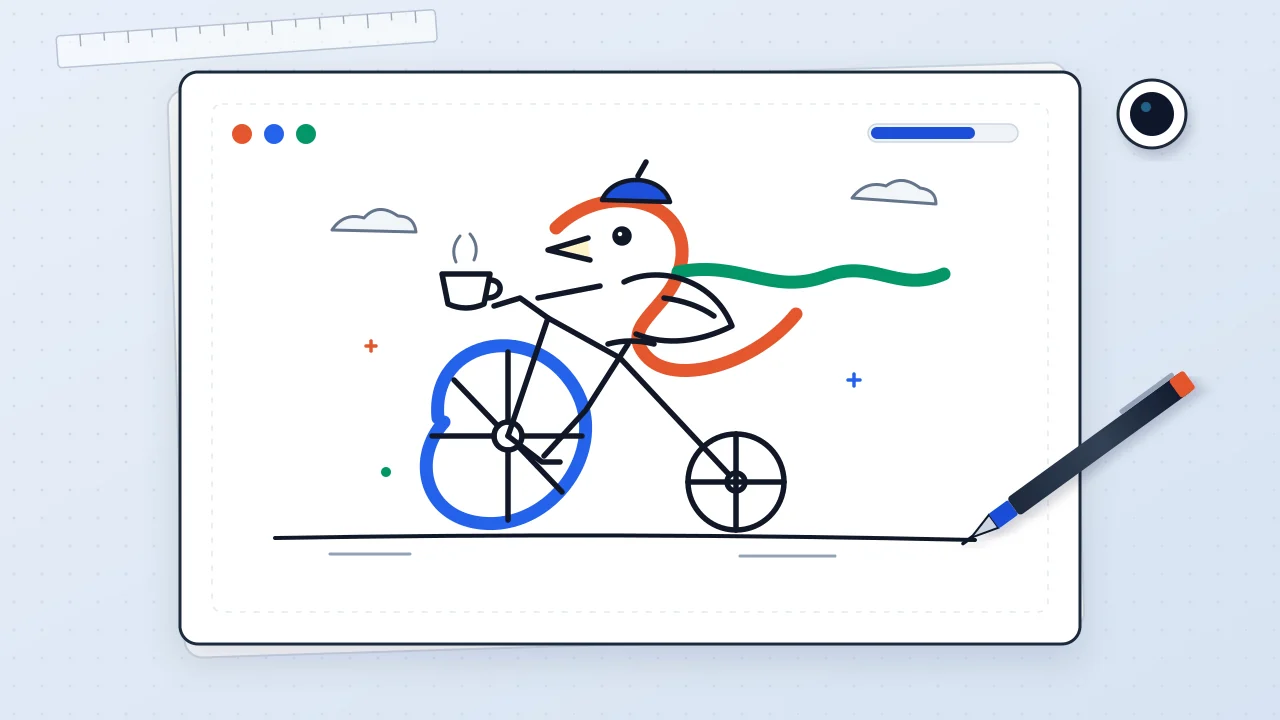
Staring at three random squiggles can occasionally cause blank-page freeze. The fastest cure is active rotation: pick the single weirdest squiggle first—usually the red or blue curve with the sharpest bend—and spin it through four 90-degree stops while asking one concrete question at each turn: "Is this a beak, a smile, a hat brim, or a wave?"
Once one squiggle claims an identity, the other two become supporting props rather than obstacles. Bring them physically close to your hero squiggle so the viewer's brain reads all three colors as part of one intentional object.
5 Repeatable Doodle Archetypes That Always Work
Whenever a daily seed feels stubborn, cycle through these five flexible templates that absorb almost any curved, jagged, or looping line:
- The Expressive Character or Creature: Turn the tightest arc into a nose, bill, or hairstyle; let a wavy line become a scarf, cape, or mustache; use the third line as a hat rim or eyebrows. Two solid dot eyes and a tiny curved mouth immediately bring almost any abstract shape to life.
- The Floating Vehicle or Vessel: Sailboats, bicycles, hot-air balloons, submarines, and tiny rockets thrive on geometric curves. A horizontal green or blue squiggle instantly becomes water, a road, or a cloud trail, leaving the other two strokes free for sails, wheels, or canopies.
- The Cozy Everyday Object: Teacups, vintage cameras, desk lamps, ramen bowls, and potted cacti use crisp minimal ink strokes. Everyday objects work especially well when your ink meter is tight because straight geometric framing uses far less ink than organic fur or feathers.
- The Two-Element Mini Scene: Split the sheet cleanly—one squiggle forms the horizon (mountain ridge, ocean wave, hill) while the other two combine into a tiny subject interacting with it (a camper's tent, a lighthouse beam, or a UFO hovering over a cow).
- The Visual Pun: When two squiggles simply refuse to look realistic, lean into humor. Turn a chaotic zigzag into a heart-rate monitor, a tangled pair of earbuds, or a stressed commuter's coffee-jitters aura—and let a deadpan title seal the joke.
Ink Conservation Tactics for Limited-Ink Rounds
Running out of ink halfway through a face or wheel is the most common heartbreak in Squigdle. Keep these four drafting habits in mind:
- Outline big shapes first, details last: Lock in the silhouette (head, body, wheels, horizon) while your ink bar is above 50%. Add expressions, steam lines, or stars only after the core subject is already unmistakable.
- Skip solid fills and heavy cross-hatching: Solid black shading burns huge amounts of ink without improving thumbnail readability. Let the bright white paper and vibrant red/blue/green squiggles supply all the color contrast you need.
- Let the squiggles do the structural work: Never trace directly over a colored squiggle with black ink. Connect from its endpoints or intersect cleanly through it so every colored stroke saves you black ink.
- Draw in short, deliberate segments: Short strokes give you natural checkpoints to glance up at the ink meter rather than draining 30% in one sweeping border box.
No-Undo Recovery Tricks (Turning Slips Into Features)
Because official Squigdle has no undo button, even experienced players occasionally misplace a dot or overshoot a corner. Instead of abandoning the doodle:
- Stray dot? Turn it into a flying bee, a freckle, a twinkling star, or an air bubble.
- Wobbly line? Mirror a second playful motion line beside it so it reads as intentional cartoon movement or wind.
- Overshot edge? Extend it cleanly into a table edge, hat brim, or ground shadow so the eye reads it as structure.
Sharpen Your Eye Between Daily Resets
Try clicking Idea Spark inside the Squigdle Practice Sketchbook to pull from our 36 shape-spotting prompts, or toggle Strict Rules to test whether you can finish a complete recognizable doodle using under 60% of the ink bar. When you are ready to optimize how voters react to your sketches, head over to our Squigdle Voting & Ranking Guide.
Frequently Asked Questions
What is the easiest way to get ideas from three random squiggles?
Start by dragging and spinning the single most unusual squiggle until it resembles a beak, hat, wave, or wheel. Once one shape locks in a subject, cluster the other two squiggles around it as props, scarves, or terrain.
How do top Squigdle players save ink?
Do not trace over the colored squiggles, avoid solid black shading or heavy backgrounds, and sketch the main silhouette first before spending leftover ink on faces, clouds, or motion lines.
How can I recover from a mistake when Squigdle has no undo button?
Treat stray lines as cartoon flourishes: turn an accidental dot into a star, bubble, or bug; turn a wobbly stroke into a wind line or shadow; or lean into the imperfection with a funny self-aware title.
What kind of title scores better in Squigdle voting?
Short, punchy titles of two to five words work best—especially titles that complete a visual gag or name a tiny character moment without explaining the entire drawing.